
Thinking about learning to dive in Roatan? I got my PADI Open Water certification here, and what started with a slightly panicked first descent turned into one of my favorite travel experiences. Here’s what you need to know about the costs, courses, and what it’s actually like getting scuba certified in Roatan.
Roatan is one of those places where it seems like everyone is either diving or learning to dive, and after spending a few days on the island, I could see why! With incredible coral reefs, warm Caribbean water, and plenty of dive schools to choose from, it seemed like the perfect place to finally get my PADI Open Water certification.
Before committing to the full course, we decided to do a try dive with Sun Divers in West End, just to make sure it was something we actually enjoyed. Luckily, I absolutely loved it and was hooked from that moment on!
We ended up signing up for our Open Water course, getting certified alongside two other girls, and even doing a few extra fun dives afterward.
So, if you’re thinking about learning to dive in Roatan, I’ll share everything you need to know, from how much it costs and choosing a dive school to what the course is actually like and whether I’d recommend getting certified here.
Learn To Scuba Dive In Roatan: My Full Experience

Learning To Scuba Dive In Roatan At A Glance
If you’re figuring out whether you have the time and budget to get certified in Roatan, here’s the quick version of how it went for me:
| My experience | |
|---|---|
| Where I learned | Sun Divers in Half Moon Bay, West End |
| What I booked | An Open Water 1 try dive, followed by my PADI Open Water course |
| Group size | Four students |
| Current course price | US$480 with eLearning at Sun Divers, plus Honduran sales tax and a US$10 marine park fee |
| Time needed | Minimum 2½ days of training on the island if you complete the eLearning beforehand |
| Hardest part | Getting the hang of my buoyancy |
| Would I do it again? | Absolutely. I’d choose Sun Divers again, too. |
I’d give yourself at least a week on Roatan if diving is a big part of your trip. We had to wait a couple of days for a spot after showing up without a booking, and I’m glad we had time for extra fun dives once we’d finished the course.
Is Roatan A Good Place To Start Diving?
For me, yes. We practiced our skills in the shallows at Half Moon Bay before heading out to the reef by boat, and the warm water made those first sessions a little easier. There was already enough to think about while I tried to work out what I was doing!
I also liked that our days didn’t have to revolve entirely around the course.
We were staying near West End, so we could go for a swim, find somewhere to eat, or just hang out at the beach afterward. What was meant to be a short stay turned into nearly two weeks, partly because we wanted to keep diving.
If you’re nervous about trying scuba, I’d pay close attention to how you feel with the instructors when choosing a school.
I loved the team at Sun Divers, and being in a small group of four gave me room to settle in.
For ideas on your days out of the water, see my guide to the best things to do in Roatan.


How Much Does A PADI Open Water Course Cost?
At Sun Divers the PADI Open Water course costs US$480 per person. That includes eLearning, equipment, instruction, four training dives, a logbook, and certification processing. You’ll also need to pay 15% Honduran sales tax and a US$10 Roatan Marine Park fee, so I’d budget around US$562 in total.
It’s worth checking what’s included when you compare dive schools.
For example Roatan Divers, lists its Open Water course at US$530, including eLearning, gear, tax, and card fees. I’d ask each shop for the final amount before booking rather than going by the first price you see.
If you’d like to try diving before paying for the whole course, like I did budget around US$120. At Sun Divers we chose their Open Water 1 option, which let us put what we’d spent toward the full course when we decided to continue.
I’d also leave a little room in your Honduras trip budget for fun dives afterwards!


Choosing The Right Dive School
Roatan has heaps of dive schools, especially around West End, and honestly it’s hard to know how to choose when you’ve never dived before.
I stopped in at a few shops before booking with Sun Divers, and how comfortable I felt talking to the team made a big difference.
I’ve included a few different schools to consider below. As you compare them, check the total price, what’s included, and the group size. You want to feel comfortable with the people teaching you.
Sun Divers Roatan
Sun Divers is right on Half Moon Bay in West End. We practiced skills in the shallow water outside the shop, then took the boat out for our dives.
They’ve also got an air-conditioned classroom, Scubapro gear, lockers, and showers, which made the course days pretty easy.
Here’s the useful booking stuff:
- PADI Open Water: US$480 including eLearning, equipment, four dives, and certification processing. Allow about 2½ days on the island if you finish the eLearning first. Tax and the US$10 marine park fee are extra.
- Try dives: Discover Scuba Diving is US$120, while Open Water 1 is US$145. We chose Open Water 1 since it could go toward the full course if we continued.
- Group size: Sun Divers caps student groups at four per instructor, which is exactly how many were in ours.
This is the school I learned with, and I’d happily choose them again. I loved the instructors and boat crew, and we went back for more dives after getting certified.

Roatan Divers
Roatan Divers is in West End, between Half Moon Bay and West End Bay. They have a private dock where you can board the boat, plus hot showers, Wi-Fi, and a shaded spot to hang out between dives.
- PADI Open Water: US$530 for a three-day course. That includes eLearning, certification, full gear, a dive computer, taxes, and card fees.
- Other beginner options: Discover Scuba Diving and the shorter Scuba Diver course.
- Fun dives afterward: Open Water students can book additional dives for US$45 each.
I didn’t take a course with Roatan Divers, so I can’t tell you what their instructors are like firsthand.
The included dive computer is handy, and their course price makes it fairly easy to see what you’re paying for.
Coconut Tree Divers
Coconut Tree Divers is right on Half Moon Bay in West End.
Of the shops I looked at, this one seemed to have more younger, budget travelers around. Its big covered deck overlooking the water also looked like a nice place to hang out and meet other divers.
- PADI Open Water: US$400 for a two to three-day course, including eLearning, equipment, boat fees, four training dives, and certification. The Roatan Marine Park fee is extra.
- Other beginner options: Discover Scuba Diving is US$110, while the shorter Scuba Diver course is US$290.
- Facilities: A dock outside the shop, a covered deck, Wi-Fi, drinking water, and coffee.
Again, I didn’t learn with Coconut Tree Divers myself, so I can’t give you a verdict on the instructors. Though I reckon it’s worth comparing if you’re watching your budget or keen on a more social place to dive.


My Experience Learning To Dive In Roatan With Sun Divers
I hadn’t realized quite how much went into an Open Water course before we started.
Alongside the dives, we had gear to set up, a bunch of homework to get through, and skills to practice in the shallows. Some parts clicked pretty quickly, and others took me a bit longer.
Here’s how it went with Sun Divers.
Deciding On A Course And Shop
Learning to dive wasn’t in our plans when we arrived on Roatan. We had just one day left before moving on, but after walking past all the dive shops in West End and watching students practice in the shallows at Half Moon Bay, I wanted to give it a go.
We spent an afternoon popping into shops, hoping someone could take us the next day. No luck. On our way back to our accommodation, we stopped at Sun Divers and spoke to Val. She could fit us in the day after next, and we liked the feel of the place enough to change our onward plans and stay longer.
We weren’t ready to commit to the full course yet, so we booked their Open Water 1 try dive.
It was US$25 more than a standard Discover Scuba Diving session and involved a few extra skills, but the cost could go toward our Open Water course if we decided to continue. That sounded pretty good to me!

Open Water 1 Course
Two days later, we showed up at Sun Divers with very little idea what to expect. Our instructor, Nick, was lovely. He helped us find fins, a BCD, and a rash guard that fit, then showed us how to put all the gear together.
There was a LOT more to remember than I’d expected.
Because we’d booked Open Water 1, we had a few extra skills to learn compared with a standard try dive. We spent the morning in the shallows practicing hand signals, retrieving a regulator, clearing our masks, and getting used to the equipment.
After lunch, we set everything up again with fresh tanks and took the boat about ten minutes to a dive site called Shallow Sea Quest.
Nick led us around the reef and kept checking that everyone was okay. We saw plenty of fish and coral, plus a green turtle! I’d snorkeled a lot before, but seeing everything from alongside the fish instead of looking down at them was something else.
I’d snorkeled a lot before, including the Blue Channel in Roatan, but seeing everything from alongside the fish was something else.
By the time we got back to Sun Divers, we knew we wanted to carry on. Nick had space for us to start the full PADI Open Water course a couple of days later, giving us time to get through the theory first.

Studying For Our PADI Open Water
Once we’d signed up for PADI Open Water, it was time for the not-so-fun bit: homework.
The other two students in our group had done their eLearning before arriving in Roatan. We’d booked at the last minute, so Sun Divers gave us a manual and knowledge checks to work through instead.
That meant reading around 100 pages a day for the next couple of days. Luckily, we’d just upgraded to a room with air conditioning, which suddenly felt like money very well spent.
I can think of better ways to spend an afternoon on Roatan than working through a diving manual, but we needed to finish it before the course.
If you know you want to get certified before your trip, I’d do the eLearning at home. Sun Divers now includes it in the Open Water course price, so you can spend more of your time on the island actually diving.

Completing Our PADI Open Water
Our Open Water 1 dive at Shallow Sea Quest counted as the first of the four dives we needed to get certified.
Over the next few days, we had more practice in the shallows, three more reef dives, and a day off to catch up on studying.
There were plenty of skills to work through, from removing and clearing our masks to sharing air and practicing emergency procedures.
Buoyancy was the hardest part for me. It looks so easy when you watch an experienced diver glide along, but it took me a lot of practice to get the hang of it.
Our second dive was at Moonlight, where we spotted flounder, angelfish, barracuda, and even a scorpionfish. We also practiced things like helping a tired diver and removing and replacing our gear.
At Puncher’s Paradise, we saw southern stingrays and worked on using a surface marker buoy and making a controlled emergency ascent.
Our final dive was at Lighthouse, where the main task was navigating with a compass, both on the surface and underwater. Then came the final test.
Thankfully, we passed! We enjoyed it enough to book more fun dives with Sun Divers while we were still on Roatan. I put my new certification to use again when I went diving in Ambergris Caye later in the trip.


What To Know Before Your First Scuba Diving Course
Before you book, make sure you know what you’ll actually be qualified to do at the end of your course.
You’ll also need to check the swimming and medical requirements, make time for the theory, and leave enough days on Roatan for the training.
We worked a lot of this out as we went, but I’d plan ahead if I were doing it again!
What Are The Requirements To Learn To Dive?
You don’t need to be an amazing swimmer to do your PADI Open Water course, but you do need to be comfortable in the water.
You’ll have to swim 200 meters without stopping, or 300 meters with a mask, fins, and snorkel. You’ll also need to stay afloat for 10 minutes. There’s no time limit on the swim, so don’t worry about being fast!
You’ll also fill out a medical questionnaire before getting in the water. Depending on your answers, you may need a doctor to clear you for diving.
I’d check PADI’s medical form before you arrive in Roatan, especially if you only have a few days set aside for your course.
How Much Time Should You Allow?
Allow around three to four days for your PADI Open Water training if you’ve finished the theory before arriving in Roatan.
We did our reading on the island, so we needed extra time for the manual and knowledge checks between dives. If you’re short on vacation days, ask your dive shop about doing the eLearning before your trip.
I’d also leave some flexibility in your plans in case the weather changes or you need more time to practice a skill. If you’re coming from the mainland, check out my La Ceiba to Roatan ferry and flight guide.
And don’t book a flight straight after your final dive. After multiple dives or days of diving, the recommended minimum wait before flying is 18 hours. I’d leave a full day if you can.
Which Scuba Diving Course Should You Take?
If you’re learning to dive in Roatan, I’d narrow it down to these three options:
Discover Scuba Diving: Choose this if you just want to give diving a go. You’ll practice the basics and dive with an instructor, but you won’t leave with a certification.
Open Water 1: This is the option we found at Sun Divers. It lets you try diving while completing part of the Open Water training. If you decide to continue with them within a year, what you’ve paid goes toward the full course.
PADI Open Water: Go straight for this if you already know you want to get certified. It takes a few days, and afterward you can dive with a buddy without an instructor.
Where To Stay In Roatan While Learning To Dive
Roatan has some beautiful hotels, but plenty were outside our budget. We moved around during our nearly two weeks on the island, and staying close to our dive shop made life much easier.
If your course is in West End, I’d look for somewhere around Half Moon Bay.
Roatan Backpackers Hostel: The hostel itself had a lovely pool and a shared kitchen, with a grocery store down the road. The location in Sandy Bay was the problem for us. We weren’t too impressed by the nearby beach, and we preferred spending our time in West End, where the dive shops were.
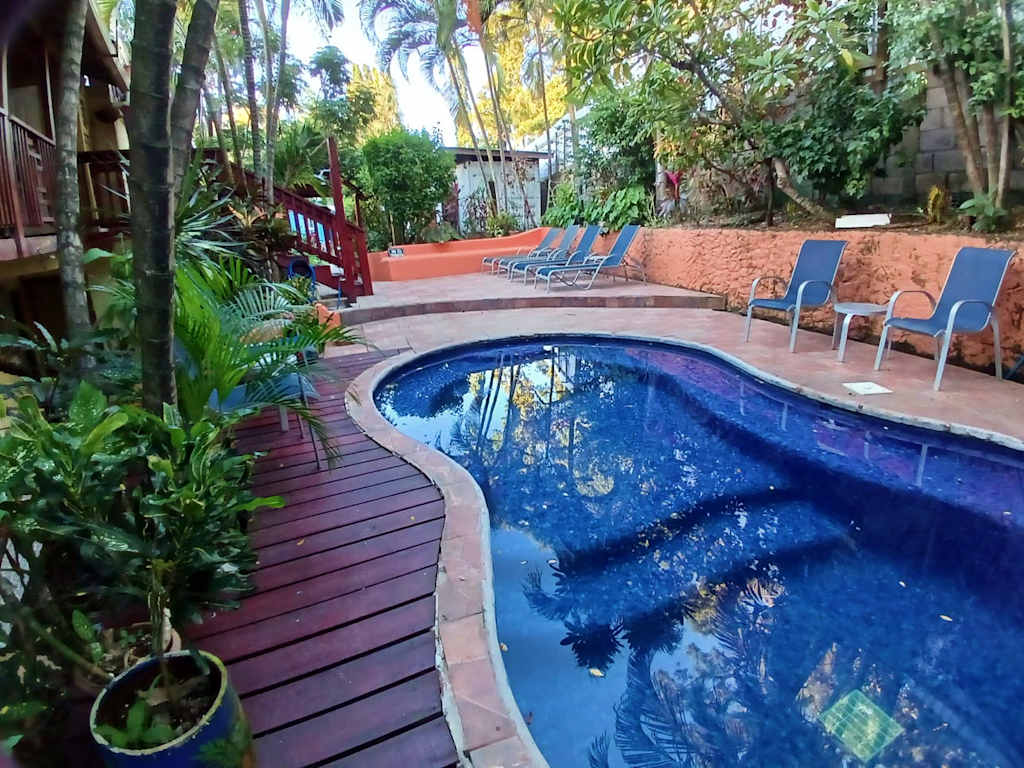
Hotel Chillies: This would be my pick if you’re learning to dive around Half Moon Bay on a budget. It’s close to Sun Divers and has everything from dorm beds to private rooms and studios. The garden setting is lovely, though be prepared for a few bugs. If you want a dorm bed, check availability directly with the hotel.
For more on West End, Sandy Bay, and budget stays, see my backpacking Roatan guide.
 One of the few hostels on the island. Rooms start from $14.00 for a dorm and $20.00 for a private. BOOK NOW |  Across the road from the beach in more of a quiet location. Single and double rooms start at $55.00. BOOK NOW |
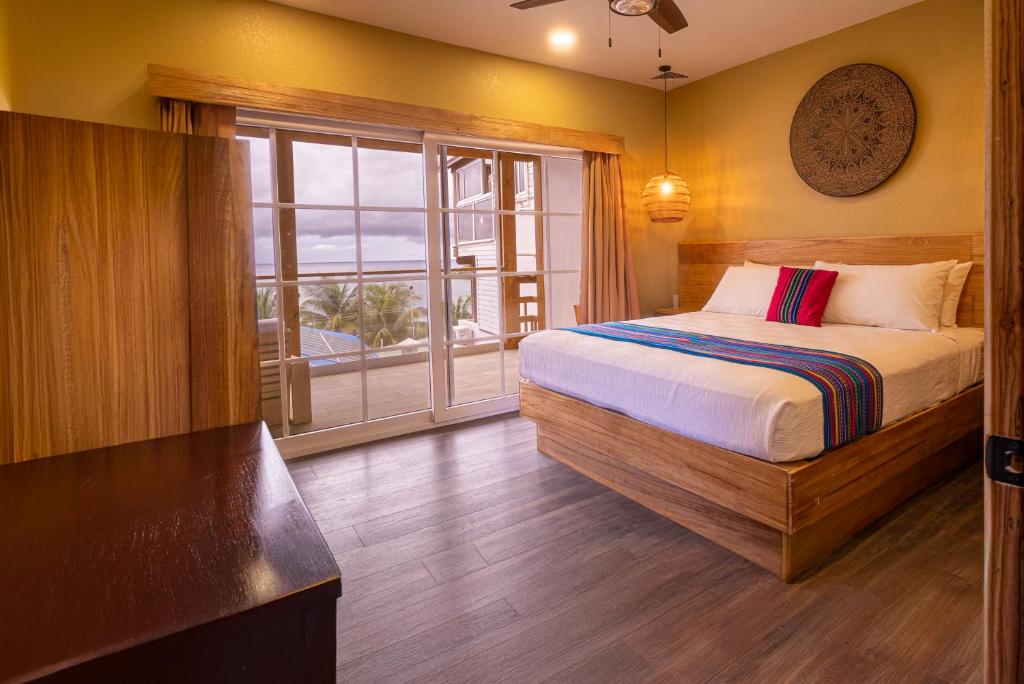 A lovely hotel in Half Moon Bay. Private rooms here start at $100.00 per night. BOOK NOW | 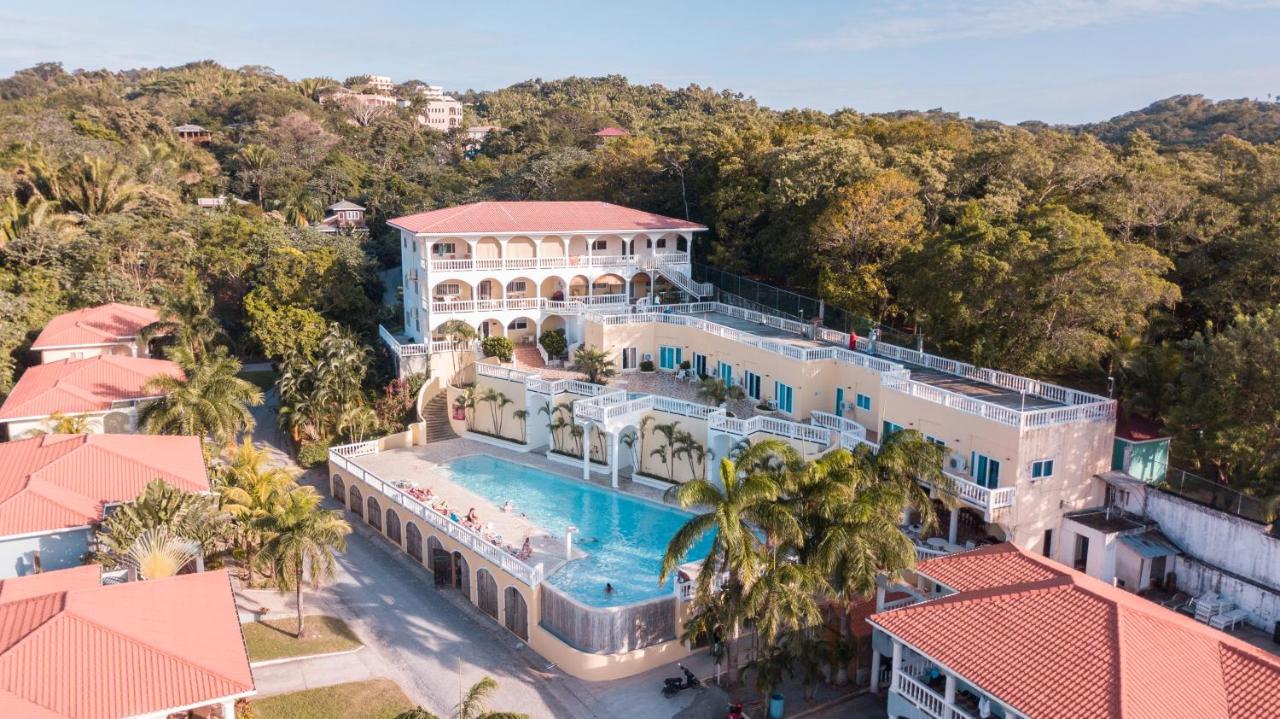 A slightly dated resort in a good location. Prices start from $80.00 per night. BOOK NOW |
FAQs About Getting Scuba Certified
Should I book my dive course before arriving in Roatan?
Yes, especially if you’re short on time. We hoped to book a try dive for the next day, but every shop we stopped at was full. Sun Divers had space two days later, so we changed our plans to make it work.
Can I start my PADI Open Water course at home and finish it in Roatan?
Yes! With a PADI Open Water referral, you can complete the theory and shallow-water skills at home, then do your four open-water dives in Roatan.
Your instructor will give you a referral form to take to the dive shop, and you have up to 12 months to finish. Arrange it with the Roatan shop before you travel so they can fit your dives into your stay.
If you only do the eLearning at home, you’ll still need to complete the shallow-water training once you arrive.
What happens if the weather is bad on a dive day?
Rain doesn’t automatically mean your dive is canceled. The dive shop will check the sea conditions and may choose a different site. One thing I liked about Sun Divers was that they could move their boat to the more sheltered side of Roatan when needed.
Can you keep diving in Roatan after getting certified?
Absolutely! We booked more fun dives with Sun Divers after finishing our Open Water course. It was so good to just enjoy the reef without a list of skills to practice. If you have the time, leave an extra day or two in Roatan for some dives after your course.
Wrap Up: Is Learning To Dive In Roatan Worth It?
I arrived in Roatan with no plans to get certified and ended up rearranging our trip to do the full PADI Open Water course.
The studying took up more of our holiday than I expected, and getting my buoyancy right took some practice, but I’m so glad we went for it.
I absolutely loved learning with Sun Divers and would choose them again. We even booked more dives with them after getting certified, which probably tells you how much we enjoyed it!
If you’re thinking of learning to dive in Roatan, leave yourself a little extra time. You might want another dive once the course is over, too.
Planning a longer trip in Honduras? My 2 weeks in Honduras itinerary covers all the top spots and things to do.
Any Questions? Let me know in the comments!
LIKE IT? PIN IT!

Disclaimer: This post contains affiliate links. So, if you click on it and purchase something, I get a small percentage at no extra cost to you. As always, all opinions are my own, and your support is much appreciated.
Related Posts
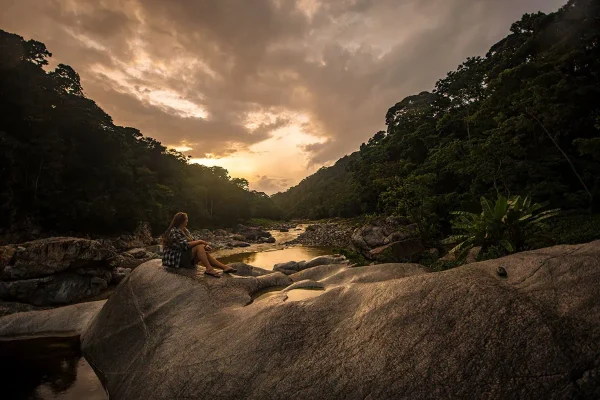
Pico Bonito National Park: Everything You Need To Know
Just outside La Ceiba, Pico Bonito National Park ended up being one of my favorite [...]
Visiting The Copan Mayan Ruins: My Complete Guide
If you’re visiting Copan Ruinas, chances are the famous Copan Mayan Ruins are the main [...]
2 Weeks In Honduras Itinerary: My Recommended Route
Planning 2 weeks in Honduras and want to see both the mainland and the islands? [...]
Roatan To Belize: The BEST Scenic Commercial Flight
If you are an ocean lover and perhaps are thinking of taking a scenic flight, [...]
19 Best Things To Do In Roatan, Honduras: 2026 Guide
Looking for the best things to do in Roatan? From learning to scuba dive and [...]

Learn To Dive In Roatan: My PADI Open Water Experience & Costs
Thinking about learning to dive in Roatan? I got my PADI Open Water certification here, [...]
La Ceiba To Roatan: Ferry Schedules, Prices & Flights (2026)
Planning to travel from La Ceiba to Roatan? I’ll break down the current ferry schedules, [...]
White Water Rafting In La Ceiba: My Experience On The Cangrejal River
I only ended up white water rafting in La Ceiba after booking a stay at [...]
How To Get From Copan Ruinas To La Ceiba (2026)
Traveling from Copan Ruinas to La Ceiba is a full day journey, taking you to [...]
Best Things To Do In Copan Ruinas: Ruins, Macaws & More
Looking for the best things to do in Copan Ruinas? The Maya ruins are an [...]
Backpacking Copan Ruinas: My Complete Travel Guide
Planning on backpacking Copan Ruinas, Honduras? After spending three nights exploring the town and unexpectedly [...]
Snorkeling The Blue Channel In Roatan: My Honest Experience
I saw plenty of fish and even eagle rays while snorkeling the Blue Channel in [...]
Honduras vs Belize: Which Is Better for Travelers?
Honduras vs Belize might look like an easy choice, but once you consider costs, safety, [...]
Backpacking Roatan On A Budget: My Complete Travel Guide
Looking for the best hostels in Roatan? I’ll share my honest experience with the island’s [...]
Antigua To Copan Ruinas: How To Travel From Guatemala To Honduras
If you want to travel from Guatemala to Honduras, come find out exactly how to [...]
6 Comments

Cost To Travel Honduras: What Should You Budget?
Keen to visit Honduras but not sure how much to save? I’ll help you work [...]

Best Beaches In Roatan: Where To Swim & Snorkel (2026)
Want to know which of Roatan’s beaches are worth your time? Half Moon Bay was [...]
2 Comments

Backpacking Honduras: The Ultimate Travel Guide
Backpacking Honduras completely surprised me. From the ruins of Copan to the beaches of Roatan, [...]
Best Hostels In La Ceiba For Budget Backpackers 2026
Looking for the best hostels in La Ceiba? Whether you’re stopping overnight before heading to [...]
Macaw Mountain Copan Ruinas: Prices, Hours & My Experience
Visiting Macaw Mountain was one of the highlights of my time in Copan Ruinas. In [...]
2 Comments
